



6 Best Products for Hormonal Acne
Hormonal acne tends to show up in the same places every month, along the jawline, chin and lower cheeks, and it rarely responds to the same products that clear a teenage breakout. It needs a routine built around gently controlling oil and bacteria without stripping the skin barrier, which is what triggers more breakouts in return. Amelia Nour's acne and blemish collection is built around exactly that balance, and these six are the products we recommend most often for cyclical breakouts.
Quick Picks: 6 Products for Hormonal Acne
- Violet Water Clearing Cleanser, OSKIA (£36): a salicylic acid cleansing gel for oilier, congestion-prone skin
- Violet Water BHA Clarifying Treatment Tonic, OSKIA (£40): the step that exfoliates inside the pore
- Violet Water D-Spot Clearing Blemish Treatment, OSKIA (£28): a targeted spot treatment for the night before a breakout surfaces
- Salicylic Rescue Serum, Evolve Organic Beauty (£26): a gentler willow bark alternative to stronger acids
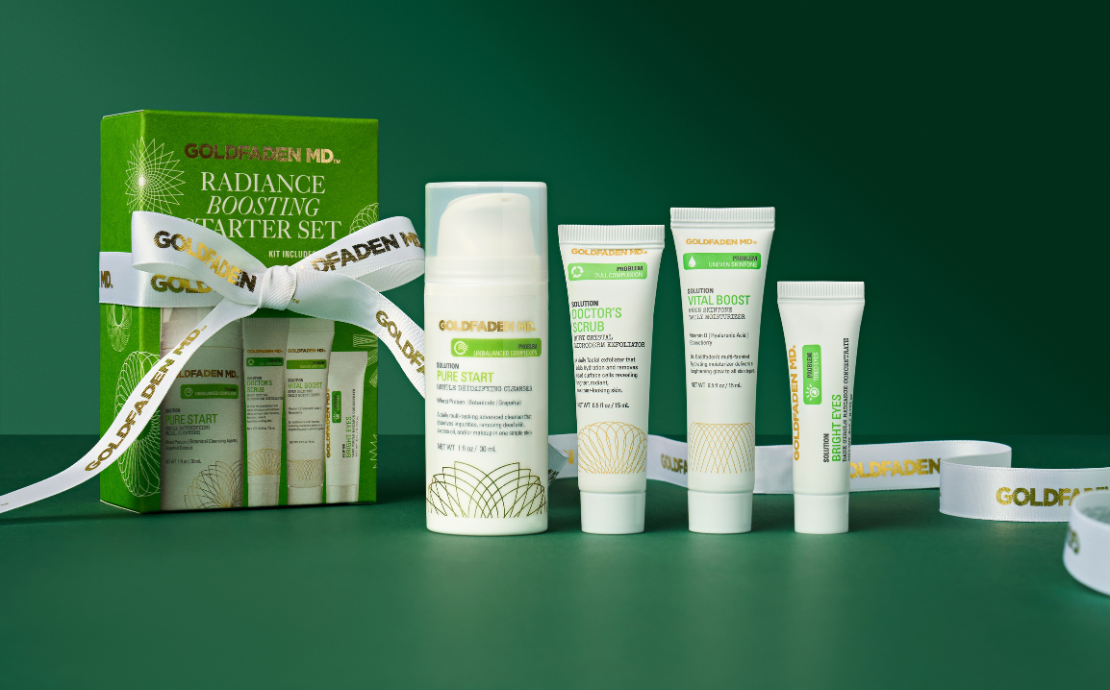
- Facial Detox, Goldfaden MD (£58): a clay and sulphur mask that draws out congestion
- Doctor's Scrub, Goldfaden MD (£65): a fine physical exfoliant for use around, not on, active spots
1. Violet Water Clearing Cleanser, OSKIA (£36)
This is a cleansing gel built around violet leaf extract and salicylic acid, so it treats congestion while it cleanses rather than just removing make-up. It foams lightly, which matters for oilier skin that breaks out around the jaw, since a cream cleanser alone can leave a residue that blocks pores further. Use it morning and night, and follow with a toner rather than going straight to a heavy moisturiser, so the salicylic acid gets a clear run at the skin. It also removes SPF thoroughly at the end of the day, which matters since leftover sunscreen is one of the more overlooked causes of jawline congestion.
2. Violet Water BHA Clarifying Treatment Tonic, OSKIA (£40)
Where the cleanser treats on the way off, this tonic is the step that actually exfoliates inside the pore. BHA, or salicylic acid, is oil-soluble, so it gets into sebum-clogged pores in a way a water-soluble acid like glycolic cannot, which is exactly the mechanism behind most hormonal breakouts along the jaw and chin. Pat it on with a cotton pad after cleansing, three to four nights a week to start, and build up slowly, since over-exfoliating is one of the most common reasons hormonal acne gets worse instead of better. Our guide to skincare acids breaks down the difference between BHA, AHA and PHA if you want the fuller picture. Expect mild tingling for the first week or two; anything stronger than that is a sign to cut back to twice a week instead of stopping altogether.
3. Violet Water D-Spot Clearing Blemish Treatment, OSKIA (£28)
This is the spot treatment for the night before a breakout fully surfaces, the point where you can feel a spot under the skin before you can see it. A concentrated dose of salicylic acid and niacinamide targets that one area directly rather than treating the whole face, which keeps the rest of the skin from drying out unnecessarily. Dab it on clean, dry skin before bed and leave the rest of your routine as normal. Resist the urge to apply it twice a day; used more often than intended, spot treatments like this one tend to over-dry the surrounding skin rather than speed up healing.
4. Salicylic Rescue Serum, Evolve Organic Beauty (£26)
Evolve's version leans on willow bark as a natural source of salicylic acid, paired with niacinamide to calm the redness that usually sits around a hormonal breakout. It is lighter than the OSKIA tonic above, which makes it a good middle step for anyone whose skin reacts badly to stronger acids, or for the nights you are also using a retinoid and do not want to layer two strong actives at once. It sinks in quickly enough to wear under make-up too, which the thicker OSKIA tonic is not really designed for.
5. Facial Detox, Goldfaden MD (£58)
This pore-clarifying mask uses kaolin clay and sulphur, the older, unglamorous acne ingredient that still outperforms most trend actives when it comes to drawing oil out of congested pores. Used once or twice a week, it is the step that stops a routine from just managing breakouts and actually reduces how often new ones form. Leave it on for ten minutes rather than until it is bone dry, since over-drying a clay mask is what leaves skin tight and triggers more oil production afterwards. Apply it to the T-zone and chin only if the rest of your face runs drier, rather than treating it as an all-over weekly mask.
6. Doctor's Scrub, Goldfaden MD (£65)
A physical exfoliant is usually the wrong move on active acne, but Goldfaden MD's ruby crystal formula is fine enough to use around, not on top of, inflamed spots, lifting the dead skin that traps oil in the first place. Use it once a week, on skin that is not actively flaring, to stop post-acne marks settling into the skin for longer than they need to. If you are also dealing with the darker marks acne leaves behind once a spot has healed, our guide to pigmentation covers how to fade those separately from treating active breakouts.
Common Mistakes That Make Hormonal Acne Worse
The most common one is switching products too often. Every new cleanser or serum causes a short adjustment period, and judging it as 'not working' after three or four days, then swapping again, means skin never gets the four to six weeks most actives need to show a real result. The second is over-cleansing: washing the face three or four times a day to control oil strips the barrier instead, which makes skin produce more oil in response and often makes breakouts worse within a week. The third is picking at spots, which is obvious advice but worth repeating, since it is the single biggest cause of acne scarring and dark marks that outlast the breakout itself by months. Finally, skipping SPF because a product feels 'active enough' already is a mistake, since salicylic acid and retinoids both increase how easily skin burns and marks in the sun.
Building a Routine for Hormonal Acne
The order matters as much as the products: cleanse, treat with a BHA tonic, spot treat anything already surfacing, then moisturise. Skipping moisturiser because skin feels oily is one of the most common mistakes, since dehydrated skin often produces more oil to compensate, not less. SPF is non-negotiable too, since most of the actives above make skin more sensitive to sun, and our guide to choosing an SPF covers how to pick one that will not clog pores further. If acne is painful, cystic, or not responding to a consistent routine after eight to twelve weeks, it is worth speaking to a GP or dermatologist, since persistent hormonal acne can have underlying causes that skincare alone will not resolve. For the correct order to apply everything above, our guide to layering skincare products is the natural next step.
FAQs About Hormonal Acne
What causes hormonal acne?
Fluctuating hormones, particularly around the menstrual cycle, pregnancy or stopping contraception, increase oil production and change how skin sheds dead cells, which together block pores more easily. It is not caused by poor hygiene, which is why harsh cleansing usually makes it worse.
Where does hormonal acne usually appear?
Most commonly along the jawline, chin and lower cheeks, in contrast to the forehead and nose breakouts more typical of teenage acne. It often follows a monthly pattern rather than being constant.
Can skincare alone clear hormonal acne?
For mild to moderate breakouts, a consistent routine with salicylic acid and a proper moisturiser and SPF is often enough. More persistent or cystic acne usually needs a dermatologist involved, since it can be linked to underlying hormonal factors that topical products cannot address.
How long does it take to see results from acne skincare?
Most activities need four to six weeks of consistent use before you can judge whether they are working, and up to twelve weeks for the full effect. Judging a product after a week, in either direction, is too soon.
Should you moisturise if you have hormonal acne?
Yes, always. Oily or acne-prone skin still loses water through the day, and skipping moisturiser tends to push the skin to produce more oil to compensate, which works against every active in this list rather than helping it.
The Takeaway
Hormonal acne responds best to consistency rather than switching products every few weeks looking for a faster fix. Start with the full acne and blemish range at Amelia Nour, and read our guide to the correct skincare order to make sure these six are actually working together rather than against each other.


